Services to Businesses and Communities (SBC)
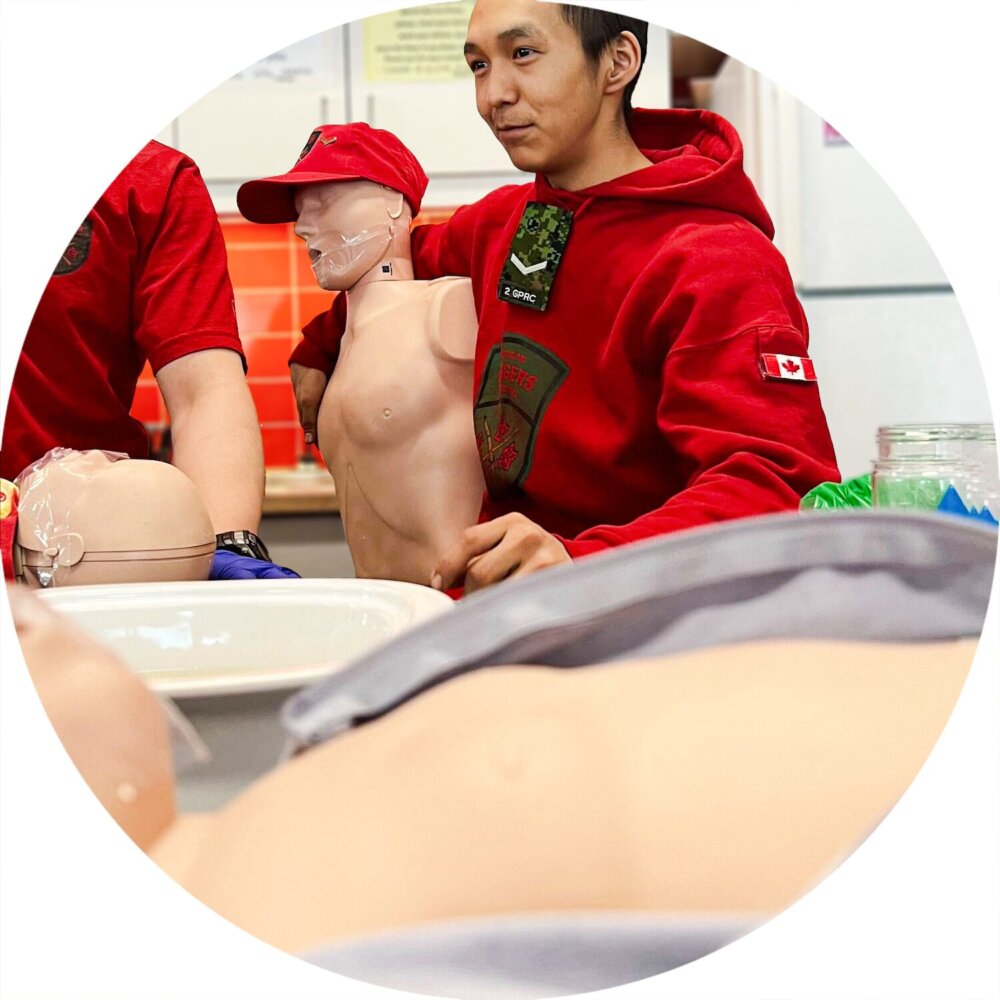
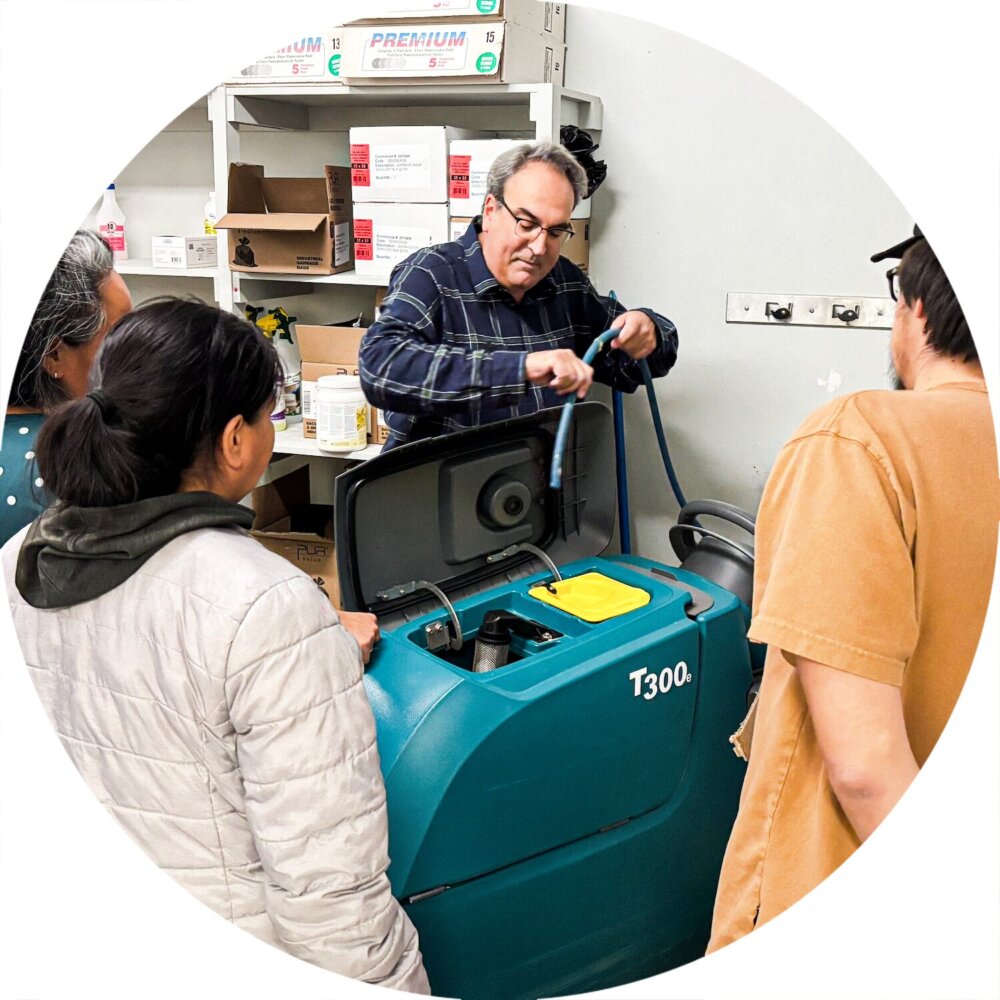

Kativik Ilisarniliriniq (KI) delivers flexible, community‑driven, and industry‑focused training that builds local skills, supports employment, and helps organizations thrive.

Strengthening Nunavik’s Communities through Training
By linking regional partners with expert consultants, our team ensures every program meets the unique professional and cultural needs of each community. Consult our current training offer >
We have cultivated a large network of community groups, businesses, and organizations across Nunavik and in the southern parts of the province.
Our versatile team is skilled in project management and possesses a deep, firsthand understanding of the unique employment and educational landscape of the northern region.
We combine regional insight with southern resources to ensure your training program is practical, professional, and perfectly suited to the realities of the North.
- Custom Training:
We develop unique programs, upon request, designed specifically to meet your organization’s goals.
- Workforce Development:
We provide essential certifications and skill-based training—such as First Aid, Workplace Hazardous Materials Information Systems (WHMIS), Carpentry, and Security—for both current employees and job seekers.
- Flexible Delivery:
To ensure accessibility, all programs are offered in person (onsite), online, or in a hybrid format.
- Data-Driven Solutions:
Our training is backed by continuous situational analysis, including our 2024 Nunavik-wide needs assessment, to stay aligned with local priorities.
I'm ready. How do I initiate training with SBC?
We guide you through every stage: from your initial request to final delivery, ensuring your team has everything they need to succeed.
STEP 1 : Request
- You identify a training need. Contact Our Team
STEP 2 : Fund & Design
- We secure funding partners and co-develop the curriculum.
STEP 3 : Facilitate
- We manage delivery and support participants.
STEP 4 : Evaluate
- We use feedback to report results and improve on future sessions.
Reach out to our team for more information.
We look forward to building your program together!

Note: Custom projects are 50% co-funded*;
entering into a contract is required before planning.
* Kativik Ilisarniliriniq will assist your organization in securing matching funding partners.
Public Safety, Emergency Response & Community Support
Overview
- A highly practical occupational health and safety program providing standardized life-saving skills. The training equips organizational workforces with critical competencies in cardiopulmonary resuscitation (CPR), automated external defibrillator (AED) use, airway management, and trauma response to ensure rapid, compliant intervention during workplace medical emergencies.
- Certification: Canadian Red Cross certification (valid for three years) in, for example, Emergency First Aid, Childcare First Aid, or Standard First Aid.
| Target workforce | | | Duration | | | Example of schedule |
| | | | | |||
| Across all public and private regional organizations requiring mandatory workplace certification, recertification, or compliance with safety regulations. | | | Flexible eight-hour (Emergency) or 16-hour (Standard) formats based on organizational needs. | | | Year-round regional deployment, featuring scheduled multi-week training trips in fall and winter. |
Overview
- This streamlined emergency response workshop equips communities with vital, non-certified life-saving techniques. The workshop focuses on immediate, hands-on competencies relevant to adult CPR, administration of epinephrine auto-injectors (e.g., EpiPen) for severe allergic reactions, and use of naloxone nasal spray for rapid intervention in opioid overdose.
- Certification: Non-certificated public awareness program; participants receive participation acknowledgment and a printed emergency reference card.
| Target workforce | | | Duration | | | Example of schedule |
| | | | | |||
| Frontline community workers, youth advocates, volunteers, and organizational staff seeking critical public health awareness without needing standard workplace certification. | | | A highly interactive one-hour awareness workshop. | | | Integrated into the regional First Aid travel schedule, running year-round (April to March) as a targeted community outreach day during scheduled village visits. |
Overview
- A highly specialized Emergency Response program designed for remote locations where professional medical extraction may be delayed. The training focuses on building critical self-reliance and practical strategies for providing advanced stabilization, patient assessment, and extended medical care over periods ranging from 24 hours to multiple days on the land.
- Certification: Wilderness Advanced First Aid (WAFA) certification (valid for three years).
| Target workforce | | | Duration | | | Example of schedule |
| | | | | |||
| Land-based guides, group leaders, outdoor educators, and field personnel who operate excursions or work in remote and challenging geographic areas. | | | 40 hours of intensive training delivered over a five-day course period. | | | Planned and coordinated during the summer months for local deployment and implementation in the fall. |
Overview
- A specialized training program that focuses on core competencies in the areas of surveillance, emergency intervention, and conflict de-escalation. The training helps to build a qualified, locally based security workforce ready to support municipal, corporate, and public infrastructure safety across northern communities.
- Certifications: Certificate of Professional Qualification as a Prevention and Security Agent (Certificat de qualification professionnelle d’agent de prévention et de sécurité; CQP-APS), making graduates eligible for the agent licence issued by the provincial Bureau de la sécurité privée (BSP). Certificate in First Aid (16-hour CNESST course).
| Target workforce | | | Duration | | | Example of schedule |
| | | | | |||
| Regional workers, occupational safety personnel, and adults looking to enter or transition into the public or private safety and security sectors. | | | 54 hours of comprehensive curriculum-based instruction. | | | Intensive training blocks delivered locally over a spring-to-summer schedule. |
Overview
- A specialized safety initiative that equips frontline care staff with trauma-informed crisis intervention and de-escalation skills. The program focuses on communication and physical safety to manage workplace aggression effectively.
- Certification: Recognized basic training framework completion certificate.
| Target workforce | | | Duration | | | Example of schedule |
| | | | | |||
| Frontline caregivers, support workers, and administrative staff employed in family houses, care-based settings, or social services. | | | 32 hours for full basic training; eight hours for refresher courses. | | | Full sessions delivered over four consecutive days, with one-day refresher courses scheduled as needed. |
Childcare, Education & Social Services
Overview
- Childcare Nutrition is a capacity-building program that helps childcare workers in Nunavik enhance nutrition and food safety practices. Participants gain practical skills in healthy meal planning, food preparation—including traditional country food—and kitchen management while meeting MAPAQ standards and supporting children’s health and development.
- Certification: MAPAQ Food Safety Certification. In-House Certificate of Completion.
| Target workforce | | | Duration | | | Example of schedule |
| | | | | |||
| Childcare facility workers, kitchen staff, and cooks responsible for food preparation and meal planning. | | | Blended model featuring two 10-day centralized sessions alongside regional community support visits. | | | Centralized intensive blocks in the summer, followed by community coaching visits on-site in the fall. |
Skilled Trades, Construction & Technical Training
Overview
- Part of a modular certification initiative that delivers advanced machine-specific operator training. It provides field personnel with the technical competencies and risk-mitigation strategies required to operate backhoe equipment safely on infrastructure projects.
- Certification: Machine-Specific Heavy Equipment Operator Completion Certificate.
| Target workforce | | | Duration | | | Example of schedule |
| | | | | |||
| Regional workers, infrastructure teams, utilities personnel, and construction staff requiring specialized machinery certification. | | | 375 hours of practical, equipment-specific field training. | | | Hands-on operational sessions running from early summer through mid-December. |
Overview
- A cutting-edge technical program designed to modernize infrastructure management, environmental monitoring, and emergency response strategies. The training guides field personnel, regardless of prior drone piloting experience, through full Canadian regulatory compliance, while teaching safe flight operations, risk management, and high-quality aerial data acquisition. With these skills, operators may utilize drone technology to conduct inspections typically carried out through high-risk manual methods.
- Certification: Transport Canada’s Remotely Piloted Aircraft System (RPAS) Advanced Operations Pilot Certificate (VLOS) and Restricted Operator Certificate – Aeronautical (ROC-A).
| Target workforce | | | Duration | | | Example of schedule |
| | | | | |||
| Field technicians, occupational safety personnel, inspectors, and emergency responders looking to integrate remote-piloted aircraft technology into monitoring and maintenance operations. | | | Approximately 210 hours of combined theoretical instruction and practical flight training. | | | Delivered across 14 local communities via three distinct training cycles throughout late spring, summer, and fall. |
Overview
- A mandatory legal compliance program fully aligned with Québec’s Act Respecting Occupational Health and Safety. This in-person training removes geographic barriers by delivering standardized site safety protocols directly to northern communities—equipping local workforces with the safety-conscious skills needed to reduce injury rates and secure legal employment on regional infrastructure projects.
- Certification: Official ASP Construction Safety Card (Carte de sécurité sur les chantiers de construction) recognized province-wide.
| Target workforce | | | Duration | | | Example of schedule |
| | | | | |||
| Local Inuit construction workers, general labourers, apprentice tradespeople, and site personnel requiring mandatory certification to work on Québec construction sites. | | | 30 hours of specialized instruction per session (plus a seven-hour administrative buffer). | | | Formatted as nine standalone training sessions delivered throughout the fiscal year (April to March) across seven target communities. |
Overview
- A dual-stream vocational Construction program designed to build localized skills in interior finishing and building rehabilitation. The curriculum balances safety theory and hands-on training in surface preparation, commercial painting techniques, and multi-layer plaster application, reducing reliance on Southern finishing contractors for housing and infrastructure projects.
- Certification: In-House Certificate of Technical Competency issued by Kativik Ilisarniliriniq.
| Target workforce | | | Duration | | | Example of schedule |
| | | | | |||
| Local tradespeople, maintenance crews, and individuals seeking specialized entry-level training to join the interior finishing, construction, or building maintenance sectors. | | | 140 hours total of instruction (comprising a 60-hour painting module and an 80-hour plastering module). | | | Delivered as a localized, hands-on intensive block tailored around regional cargo/sealift schedules and community availability. |
Overview
- An advanced vocational Construction program designed to bridge the gap between final-stage interior skills missing from and required for northern build sites. The program focuses on practical, field-applicable expertise in drywall installation, precise joint taping, mudding, and finishing, allowing local crews to complete highly in-demand interior finishing work and record more trade-related hours recognized by the Commission de la construction du Québec (CCQ).
- Certification: In-House Certificate of Technical Competency issued by Kativik Ilisarniliriniq.
| Target workforce | | | Duration | | | Example of schedule |
| | | | | |||
| Experienced local tradespeople, construction crews, and carpenters looking to expand their skill sets into specialized commercial and residential finishing work. | | | 80 hours total of advanced, curriculum-based practical instruction. | | | Flexible deployment windows scheduled throughout the fiscal year (April to March) based on regionally built cycles and community availability. |
Overview
- A comprehensive, three-tiered capacity-building initiative designed to optimize the supply chain, warehouse safety, and infrastructure maintenance. The program provides hands-on training and certification in front-end loader, forklift, and telehandler operations. It also offers certification in elevated work platform operation and inventory management, as well as on-site practice of snow removal techniques.
- Certification: In-House Machinery and Operational Safety Completion Certificate.
| Target workforce | | | Duration | | | Example of schedule |
| | | | | |||
| Warehouse staff, facility maintenance workers, and younger adults looking to enter inventory handling and equipment operations. | | | A multi-component program comprising 240 hours of heavy machinery operation, 192 hours of snow-clearing training, and 224 hours of online modules. | | | In-person machinery training delivered in three-week intensive blocks starting in the fall, supplemented by flexible year-round online instruction across all 14 communities. |
Transportation & Licensing
Overview
- A comprehensive heavy vehicle training program designed to secure and stabilize critical regional operations like water delivery, waste management, and fuel distribution. The program guides operators through SAAQ (Société de l’assurance automobile du Québec) prerequisites, preventative vehicle inspections, driving theory, and practical winter manoeuvres to ensure local workforce compliance and certification.
- Certification: Territorial Class 3 Heavy Vehicle Driver’s Licence (with opportunities to add air brake and manual transmission endorsements).
| Target workforce | | | Duration | | | Example of schedule |
| | | | | |||
| Current municipal operators, regional utility workers, and community members seeking qualifications to drive heavy utility, distribution, and service vehicles. | | | 72 hours total of instruction (incorporating group theory, mechanical inspection, and individual on-road driving). | | | Intensive community deployments on-site over three to four weeks featuring phased theoretical and practical training, starting in the fall. |
Overview
- A formalized road safety education initiative that delivers the mandatory provincial curriculum to northern communities. The program bridges the gap between limited territorial licences and full provincial credentials by combining driving theory, simulator training, and on-road instruction to build safe driving habits and open up local employment pathways.
- Certification: Provincial Class 5 Passenger Vehicle Driver’s Licence issued by the SAAQ (Société de l’assurance automobile du Québec).
| Target workforce | | | Duration | | | Schedule example |
| | | | | |||
| Local employees, new drivers, and community members requiring a standard, universally recognized provincial driver’s licence to expand personal mobility and career eligibility. | | | A comprehensive 13-month program combining 24 hours of classroom instruction and 15 hours of practical driving. | | | Delivered across two annual cycles (mid-August to December, and mid-January to April), utilizing fixed driving schools and SAAQ mobile unit visits for exams. |