Certificate + Short Program Diploma in Pre-School Education and Elementary Teaching
APPLICATION DEADLINE: June 15, 2026
Program Description
Launch your teaching career in Nunavik with the skills, experience, and confidence needed to lead your own classroom.
This offering combines two UQAT programs: the Certificate in Pre-School Education and Elementary Teaching in a Northern Context I (42 credits, 5340) and the Short Program in Pre-School and Elementary Teaching in a Northern Context (18 credits, 9021).
Upon completion of the certificate and university-level short program, you’ll have cumulated 60 credits. This qualifies you for a Nunavik teaching license issued by the Quebec Ministry of Education.
You will strengthen your teaching skills and help inspire the next generation of Nunavik students. As a teacher, you will nurture pride in language and culture, while fostering a lasting love of learning.
These university programs provide a solid foundation for teaching Inuktitut and confidently managing a classroom. Throughout the programs, you will complete practical work experiences in school settings, allowing you to apply what you learned. You’ll also gain meaningful experience in the teaching profession.
After completing these programs and beginning your career with Kativik Ilisarniliriniq, you may continue your studies part time while working. You would then be able to cumulate your certificate and short program credits towards a Bachelor’s Degree in Pre-school and Elementary Education (BEPEP) in Inuktitut (120 credits), with UQAT.
In Year One, students build a strong foundation for teaching practice: how children learn, how to plan lessons, how to manage a classroom, and how to support diverse learners. They also deepen their knowledge of Inuktitut—its structure, its acquisition, and its use in teaching—while completing their first practicum in local schools. This practicum connects theory to practice, allowing students to step gradually into a teacher’s role.
In Year Two, learners expand their expertise in core subject areas, such as mathematics, literacy, science, and the arts. They develop a deeper understanding of Nunavik’s school system, intercultural dynamics, and the social realities that shape educational practice in the North. The year ends with a practicum giving each student a chance to demonstrate independence, leadership, and readiness for a teaching position in their home community.
By the end of the program, graduates are prepared to:
- Teach confidently in classrooms using approaches that respect Inuit culture, language, and identity.
- Support student learning across multiple subject areas—including Inuktitut, mathematics, science, and arts.
- Create safe, engaging, and inclusive classroom environments rooted in Inuit values.
Become role models who strengthen their communities by teaching the next generation in their own language.
This two‑year journey opens the door to a meaningful career in education—one that honours tradition, empowers young learners, and helps shape the future of Nunavik from within. More Inuit qualified teachers are needed, and Nunavimmiut who choose to step into the classroom deserve access to a university pathway that reflects their language, culture, and community realities.
As a graduate of this program, you will be able to:
- Work in the education sector in Nunavik.
- Teach subjects in Inuktitut, in local schools.
- Continue your studies while working as a teacher with Kativik Ilisarniliriniq through part-time university programs. You can cumulate your certificate and short program credits towards a 120-credit UQAT Bachelor’s Degree in Pre-school and Primary Education (BEPEP) in Inuktitut.
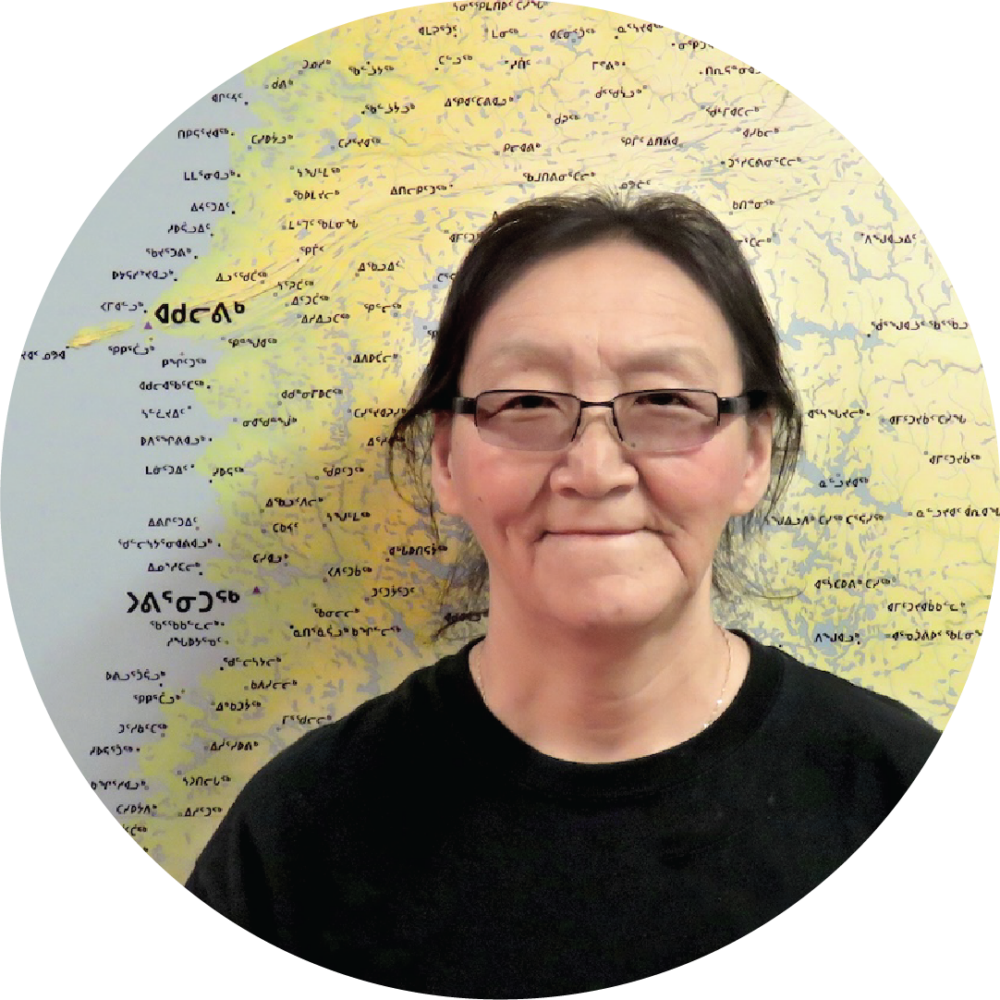
I want all Inuit from Nunavik to learn what I learned in this program because I know it will improve our way of life and our way of speaking, strengthen our culture, and have an impact on the students.
Program Courses
Over two years, this full-time program prepares future Inuit educators to lead classrooms confidently across Nunavik, offering teachings grounded in their language, culture, and community realities.
This two-year program totals 20 courses taught in Inuktitut and English. It includes two supervised teaching practica in a classroom environment.
Upon completion, students earn two UQAT credentials totalling 60 credits: a 42-credit certificate and an 18-credit short program diploma.
Here’s the list of courses offered during the first term of Year One:
- EDU1340 – Introduction to the Teaching Profession and Methodology of Academic Intellectual Work (3 credits)
Developing the representation of kindergarten and elementary school teaching. Positioning the teaching practice in an organizational, institutional and social context. Becoming aware of the problematic issues of today’s education circle. Initiating a personal and professional training project. In particular, knowing the professional competencies and insisting on those competencies relating to mediation, professional partners, communication, ethics, and professional development. Bringing students to discover efficient ways of studying and intellectual work methods by knowing more about cognitive processes at play in new and complex knowledge acquisition and personal and professional development (learning strategy, problem-solving strategies, cognitive, affective, and metacognitive strategies).
______
- EEDU1438 – Cultural Identity and Education (3 credits)
Acquiring knowledge about the concept of cultural identity. Drawing a critical statement of both school and society contributions in the cultural identity development process. Identifying perspectives regarding the roles school and society should play in that development process. Developing perspectives and skills to analyze the educational situation of the people of Nunavik and the accelerated social changes Inuit are facing. Understanding the concepts of intercultural communication and the issues it can raise. Developing knowledge necessary for the inuitisation of education led by communities.
______
- LIN1341 – Structure of Inuktitut (3 credits)
Providing Inuit teachers with the knowledge they need to teach reading, writing, and speaking skills. To develop a deeper knowledge of the structure and rules of Inuktitut. To understand categories and properties of the Inuktitut language. To improve skills in the use of the syllabic writing system. To be able to connect theory with practice by having a solid knowledge of the language structure. To develop an appreciation of Inuktitut as a language of communication that can be used in all spheres of life, particularly through learning the material covered in the school curriculum.
______
- EDU1426 – Learning Process and Pedagogical Approach (3 credits)
Providing Inuit students with the knowledge they need to study various teaching models, pedagogical approaches, teaching strategies, and methods (ways of doing) including Inuit traditional approaches to teaching children. To understand how to refer to appropriate knowledge of a child’s development and learning process, in order to analyze and understand real practice situations. To understand and to put into practice basic theoretical knowledge or action principles that could facilitate and support the pupil’s learning process. To become aware of the existing organic links between teaching approaches and the pupil’s learning process and results. To develop competency to select relevant learning and teaching strategies and methods according to the pupil’s needs.
Here’s the list of courses offered during the second term of Year One:
- EDU1439 – Planning and Preparation of Learning Activities (3 credits)
Providing Inuit students with the knowledge they need to acquire basic activity planning concepts, conduct activities in class, and analyze their experimentation. To be able to use acquired knowledge in activity preparation, in-class conduct, and analysis.
______
- STA1430 Practicum I: Introduction of Educational Practice in Inuit Context (3 credits)
To learn about the various aspects of the teaching task. To acquire basic knowledge to analyze one’s teaching practice. To develop teaching analysis skills and implement them in a real in-class teaching situation, especially in an Inuktitut teaching practice. To elaborate teaching–learning situations to develop and/or test and adapt the teaching–learning material.
______
- DID1441 Teaching and Learning Natural Numbers and Integers (3 credits)
Introduction to the general context of teaching mathematics from a perspective of integrating the cultural, human, and historical dimensions. To allow the student to consolidate their understanding and mastery of the numbers (natural numbers and whole numbers) and their oral and written designation. To understand the role of problem-solving by developing skills related to this mathematical activity and the learning of arithmetic (natural numbers and whole numbers). To develop skills to design, pilot, and analyze teaching–learning situations in relation to the concepts of this course, as addressed in pre-school and elementary school, to make meaningful and in-depth learning possible for Inuit students. To enrich the understanding of one’s role and teaching action in student learning. To develop a critical stance on various didactic and pedagogical approaches to encourage the Inuit students’ learning. To become familiar with the foundations and organization of an official mathematics training program and learn how to interpret the current program from a didactic perspective. To become familiar with the assessment of a student’s learning progress.
______
- LIN1342 First Language Acquisition (3 credits)
Providing Inuit students with the knowledge they need to develop knowledge of theories of language development in a bilingual context.
Here’s the list of courses offered during the third term of Year One:
- EDU2344 Nunavik’s Intercultural School System and Organization of Education in Quebec (3 credits)
To become familiar with the concept of school as a social organization and institution for education. To learn about the education system in northern regions. To know the education system in Quebec and Nunavik. To become aware of the historic process of the education system of Indigenous peoples. To understand and describe the evolution of educational services in the community, in an intercultural context.
______
- ARP1741 Essential Knowledge in Plastic Creation in Nunavik Kindergarten and Elementary School (3 credits)
Providing Inuit students with the knowledge they need to develop the skills of future elementary school teachers in making and appreciating artistic creations. To train and equip the students for their future role as transmitters of artistic culture.
Here’s the list of courses offered during the first term of Year Two:
- DID1443 Teaching and Learning Geometry and Measurement (3 credits)
To enrich the understanding of one’s role and teaching action in student learning, with a view to integrating the cultural, human, and historical dimensions of mathematics. To allow the student to consolidate their understanding and mastery of the concepts related to geometry and measurement. To deepen an understanding of the role of problem-solving in the development of this mathematical activity and the learning specific to geometry and measurement. To develop skills to design, pilot and analyze teaching–learning sequences on geometry and measurement as tackled in kindergarten and elementary school. To empower the student to teach the concepts of this course, in Inuktitut, in pre-school and elementary school settings. To refine their understanding and interpretation of official documents and programs from a didactic perspective. To consolidate competency to assess Inuit students’ progress of learning.
______
- EDU2345 Educational Intervention in Kindergarten (3 credits)
Providing Inuit students with the knowledge they need to develop an understanding of the developmental approach, the educational quality of pre-school education, the attachment theory, the inclusive approach, and the welcoming of diversity. To develop skills to organize the physical environment of the classroom and to plan cultural activities. To become aware of collaboration within the family and the community. To learn about pedagogical approaches to pre-school education. To take ownership of the pre-school education programs in Nunavik, Quebec, and elsewhere. To start building the professional identity of the pre-school teacher.
______
- DID1641 – Teaching and Learning Sciences and Technology in Nunavik Kindergarten and Elementary School I (3 credits)
Providing Inuit students with the knowledge they need to develop the necessary skills and acquire objects of knowledge and processes towards the learning and teaching of science and technology in elementary school, and to foster awareness of cultural and social issues of science and technology in daily living. To develop a critical sense regarding scientific and technological knowledge included in the elementary school program to support children. To learn how to design and implement teaching–learning situations based on data from science and technology didactics.
______
- DID1343 – Writing Inuktitut: Teaching and Learning (3 credits)
Providing Inuit students with the knowledge they need to develop best practices in teaching writing skills that consider how children’s minds develop. To develop skills to produce practical applications of the first language curriculum, including writing components, in order to integrate reading and speaking skills. To become familiar with the teaching material while thinking about it critically. To become aware of the pupils’ difficulties in learning how to write and to be able to diagnose them. To evaluate pupils’ learning using writing.
Here’s the list of courses offered during the second term of Year Two:
- EDU2340 Classroom Management (3 credits)
Understanding how the concept of class management has changed. Knowing and applying various intervention models and strategies in relation to the organizational structure of the learning environment, learning and socialization support, motivation, and discipline management.
______
- EDU1425 Evaluation of Pupil Learning (3 credits)
Providing Inuit students with the knowledge they need to clarify the concepts relating to the evaluation finality and components of the students’ learning. To acquire and put into practice a basic process to evaluate the learning stream of pupils. To understand and apply key concepts, approaches, rules, and policies of learning measures and evaluations. To know the various measuring instruments normally used in class. To develop measuring instruments and use them. To analyze and develop a position regarding issues presented and discussed in class. To plan, experiment, and analyze the learning evaluation process.
______
- STA1431 Practicum II: Analysis of Educational Practice and Classroom Management in Inuit Context (3 credits)
To develop and polish students’ intervention skills and representation of the teaching–learning process in real-life educative intervention situations. To observe and evaluate the conduct of that process within the teaching practice. To initiate the development of a discourse on teaching practices. To emphasize developing skills in classroom management and professional action analysis. To learn how to solve problems in classroom intervention contexts.
______
- EDU1426 – Learning Process and Pedagogical Approach (3 credits)
Providing Inuit students with the knowledge they need to study various teaching models, pedagogical approaches, teaching strategies, and methods (ways of doing) including Inuit traditional approaches to teaching children. To understand how to refer to appropriate knowledge of a child’s development and learning process, in order to analyze and understand real practice situations. To understand and to put into practice basic theoretical knowledge or action principles that could facilitate and support the pupil’s learning process. To become aware of the existing organic links between teaching approaches and the pupil’s learning process and results. To develop competency to select relevant learning and teaching strategies and methods according to the pupil’s needs.
Here’s the list of courses offered during the third term of Year Two:
- EDU1433 Adult-Child Educational Relationship (3 credits)
Providing Inuit students with the knowledge they need to develop an understanding of Inuit children’s individual educational situations, according to the historical process and the context of education. To develop knowledge from current learning theories. To study educational purposes and objectives from an occidental perspective. To develop an understanding of the transformation of the way of life and the educational and teaching practice. To develop understanding of the educational bicultural reality of the schooling situation. To understand and develop, as a teacher, the meaning of collaboration with the pupils’ parents and/or grandparents that leads to educational success in youth.
______
- LIT1745 Inuktitut Literature (3 credits)
Providing Inuit students with the knowledge they need to develop and to deepen their knowledge in the area of children’s literature. To introduce pupils to Inuit culture via children’s books. To raise awareness of the importance of children’s literature in learning the subjects taught in elementary school, including reading. To develop and test teaching and learning activities based on literary texts in a classroom setting for kindergarten and elementary school. To establish links between the world of stories and the world of children.
Living Conditions, Travel and Financial Support
If you are not an Inukjuak resident, you will be accommodated at Nunavimmi Pigiursavik Residence. This facility can host single adults, families, and single parents with children.
The residence can accommodate single students as well as families or single parents with children.
- The residence is equipped with a state-of-the-art industrial kitchen facility, staffed by full-time cooks, so the students, including their families, do not have to worry about preparing their own meals while studying full-time.
- The residence is also equipped with several common areas to accommodate cultural activities, such as sewing or crafting, as well as a workout room, an entertainment room, and a dedicated area for babysitting services.
If your children are of school age, you’ll be able to register them at Innalik School or Uquutaq School.
Admission Requirements
Candidates must meet certain criteria.
You must meet the following conditions:
- Hold a Secondary School Diploma.
- Be 21 years of age or more.
- Be a JBNQA beneficiary.
If you don’t meet these conditions, please get in touch with us.
We’ll analyze your student file and look at options with you.
Email us ➔
*IMPORTANT*
After you apply online, we will contact you. We will need a copy of the following documents to finalize your application:
- Criminal background check
- Birth certificate
- Makivvik beneficiary card (with correct and matching name on birth certificate)
- RAMQ (health) card
- Last secondary school report card