Kiluit Newsletter: Two Years of Stitching Nunavik Together
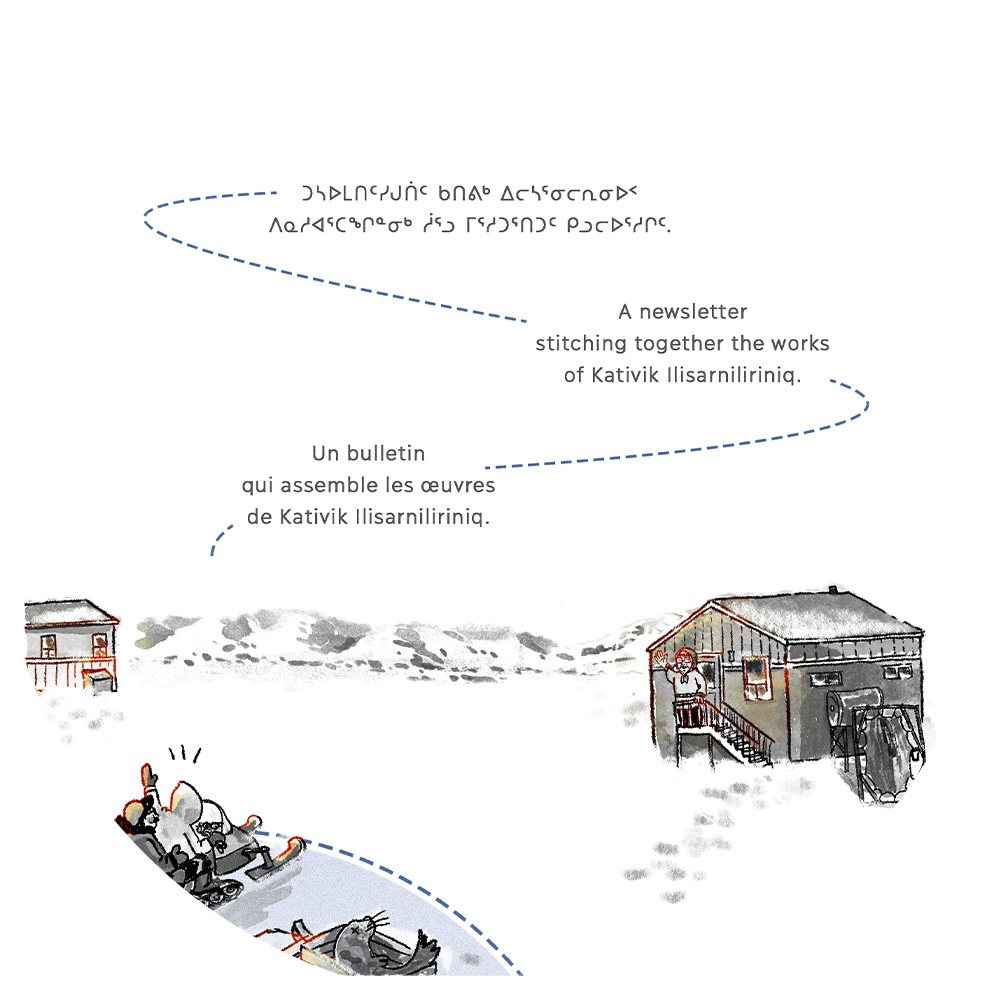
When the first issue of the ᑭᓗᐃᑦ | Kiluit newsletter landed in post office boxes across Nunavik in August 2023, it marked the beginning of something new for Kativik Ilisarniliriniq. Two years later, Kiluit has grown into an officially registered publication, archived at Bibliothèque et Archives nationales du Québec (BAnQ). Here’s what it took to get there, and who made it happen.
Before Kiluit: a history of putting Nunavik’s story in print
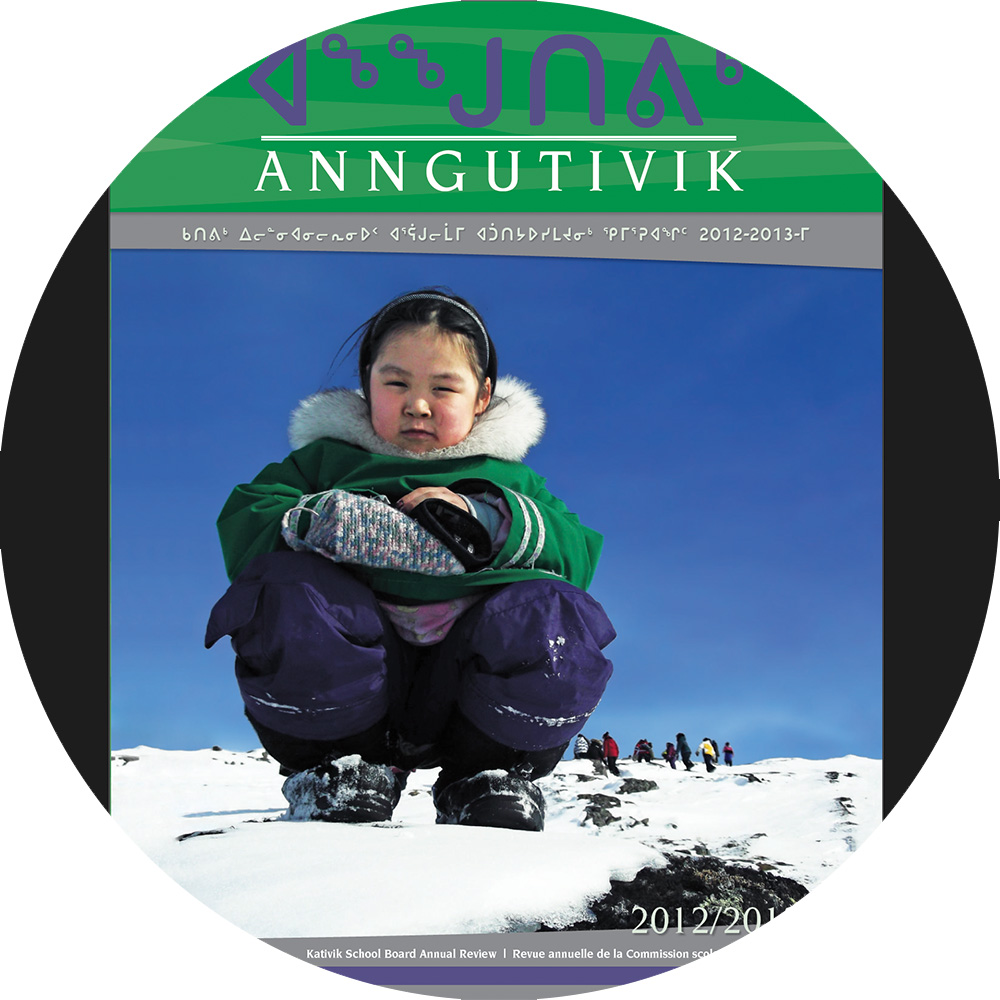
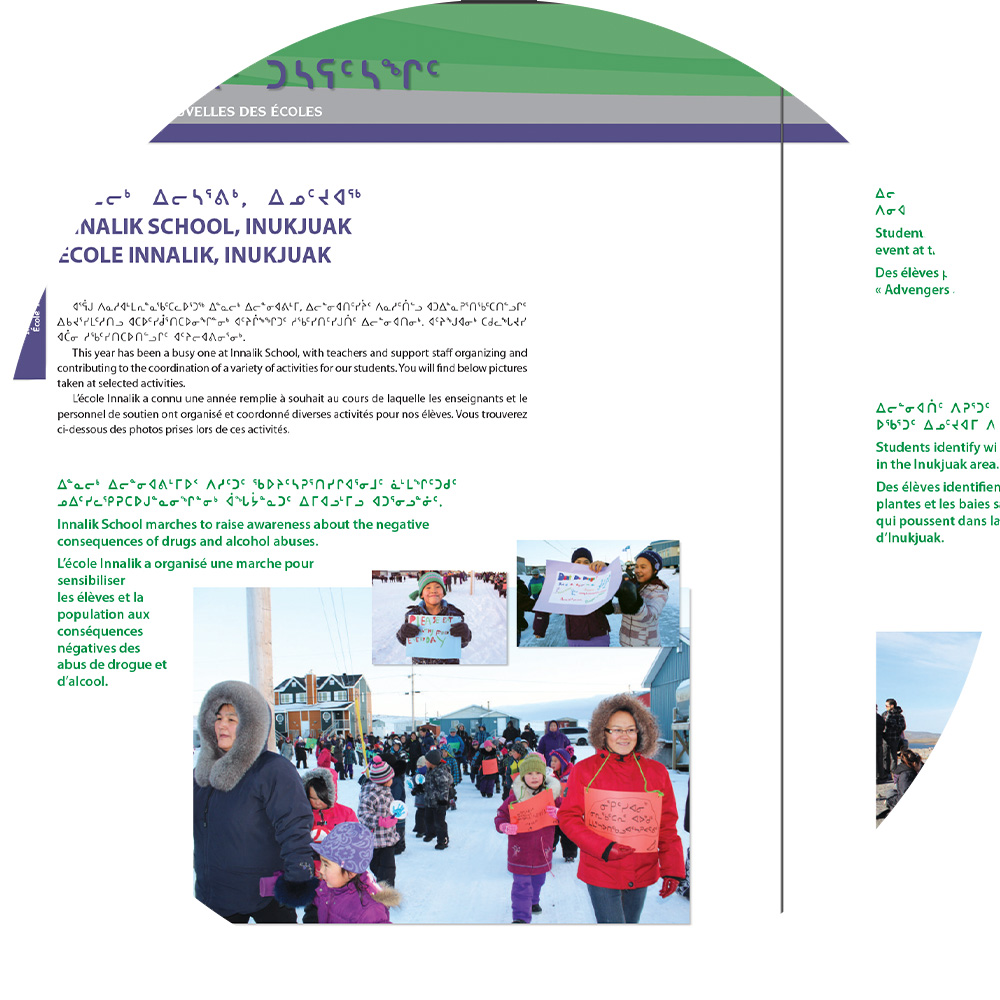
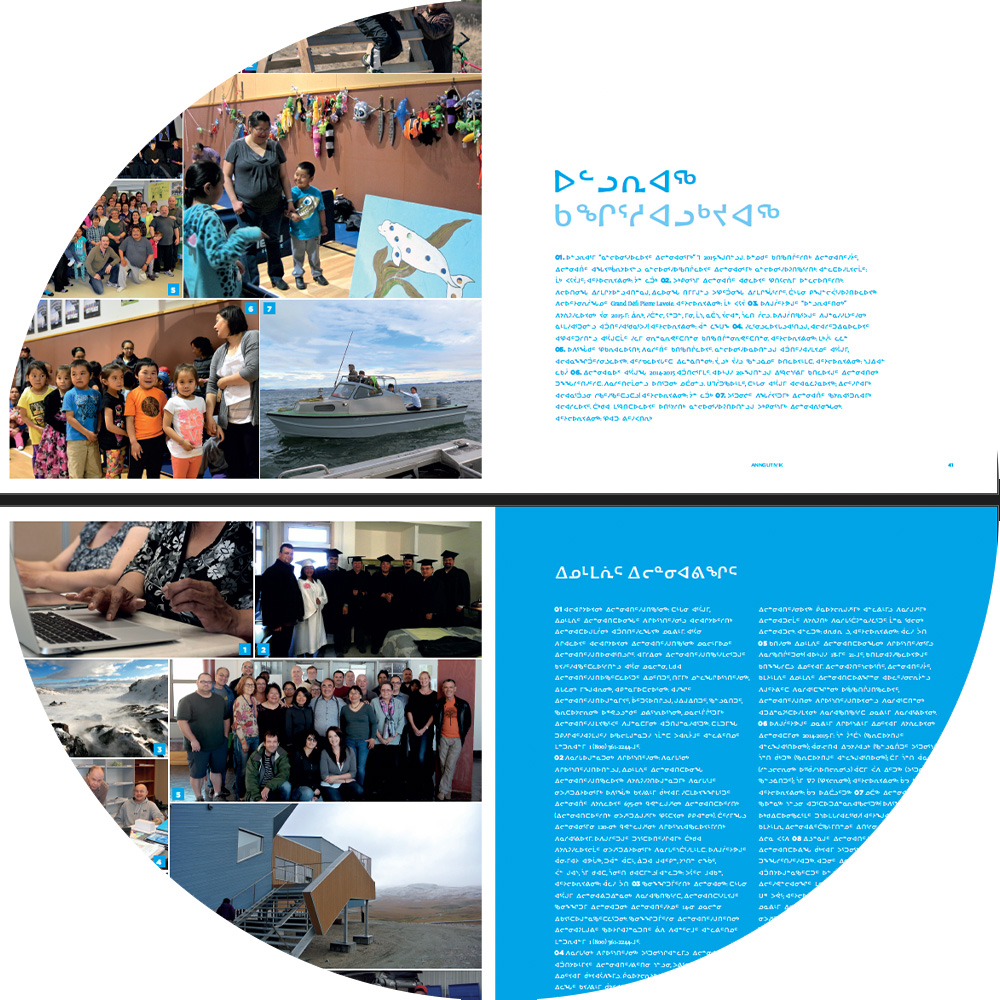
The idea of a Kativik Ilisarniliriniq publication isn’t new. For years, Anngutivik, which means “catching up” in Inuktitut, served as an annual window into school life across the region. The magazine offered a mosaic of photos and short texts submitted by schools, with no unified editorial framework. When the communications team began using social media in 2015, much of that content found a new home online, and the printed magazine was gradually phased out.
But something was missing. Social media only reaches online followers. A physical publication is a different kind of presence, one that’s more lasting and more deliberate. “In a magazine format, you can present things in a more permanent way,” says Jade Bernier, Director of Communications at Kativik Ilisarniliriniq. “It gives us another kind of channel, and it’s one that doesn’t require people to already be looking for us.”
In 2023, with a full team in place for the first time in years, the idea resurfaced. This time, it came with a clear ambition: a trilingual newsletter, designed from the ground up, and distributed to every post office box in Nunavik.

It’s as if we’re putting ourselves on the map. We’re reaffirming something about our identity, our existence as a school board, and the communities we serve. I don’t think there’s anything quite like it among school boards in the province.
A name from the classroom
Before Kiluit could go to print, it needed a name. The team made a deliberate decision: rather than choosing it internally, they held a contest for students across all Kativik Ilisarniliriniq schools. Each class could submit one proposal, which had to be a word in Inuktitut with a definition.
At Uqutaaq School in Inukjuak, then teacher Gabriel Besner turned the contest into a classroom exercise. He and his Grade 7 French students worked through Inuktitut words, starting with the syllabic “ki,” the abbreviation everyone already uses to refer to Kativik Ilisarniliriniq informally. “I explained to the students: why do people create a magazine? It’s to take information from different places, bring it together, and share it,” he recalls. “So, what word reflects that?”

When the students found out the name had been chosen, it was not just about winning a contest. It was about seeing that what you come up with in a classroom can actually become something real, something that reaches people across an entire region.
The class landed on kiluk, a stitch, a fastening. The selection committee later adjusted it to the plural form: kiluit. Several stitches, several pieces sewn together. “When we heard the name had been chosen, it just felt right,” says Gabriel Besner. “A newsletter is exactly that: different pieces assembled into one.”
The design: nothing is accidental
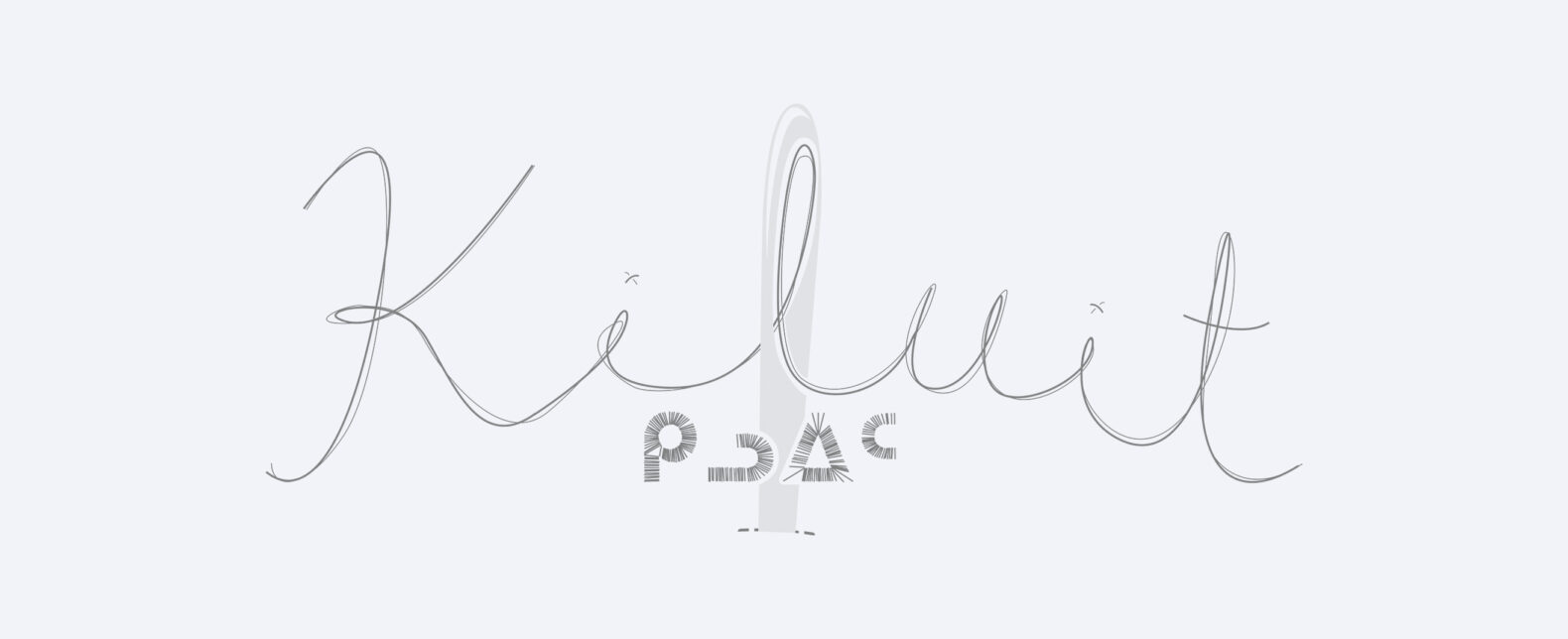
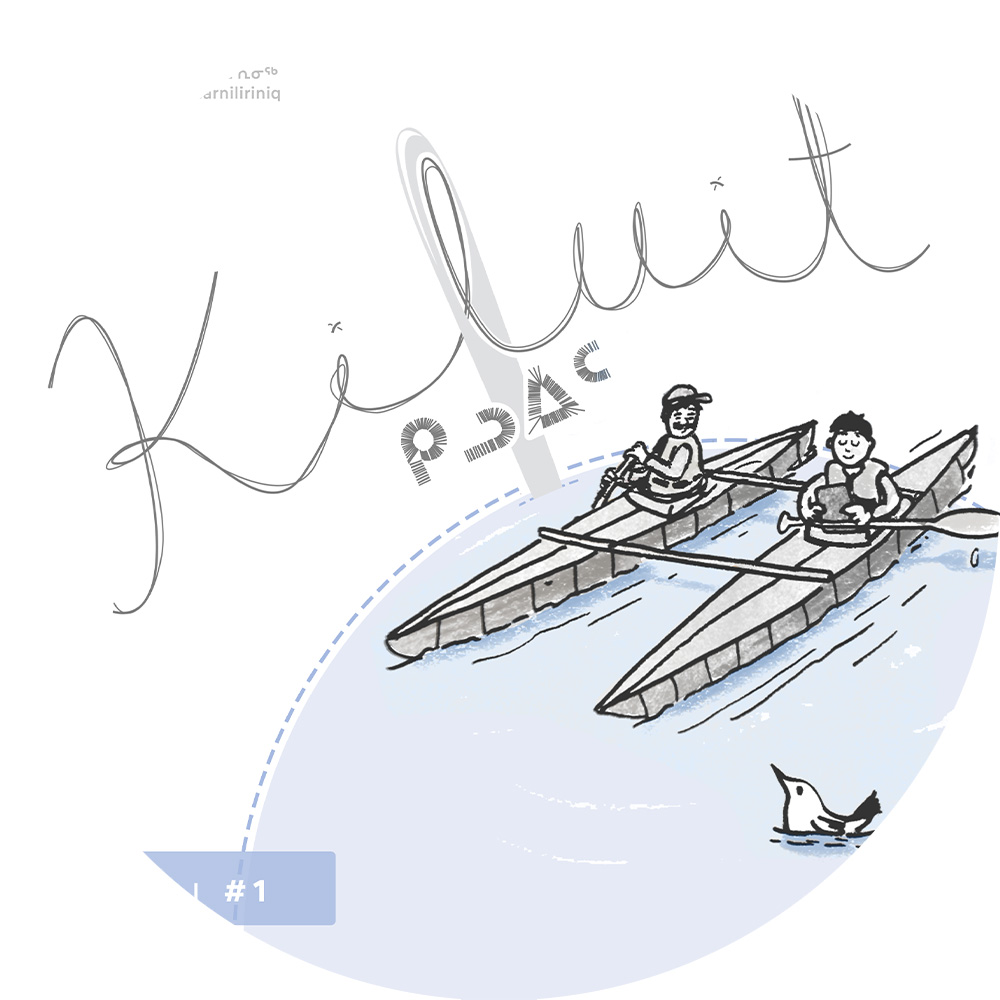
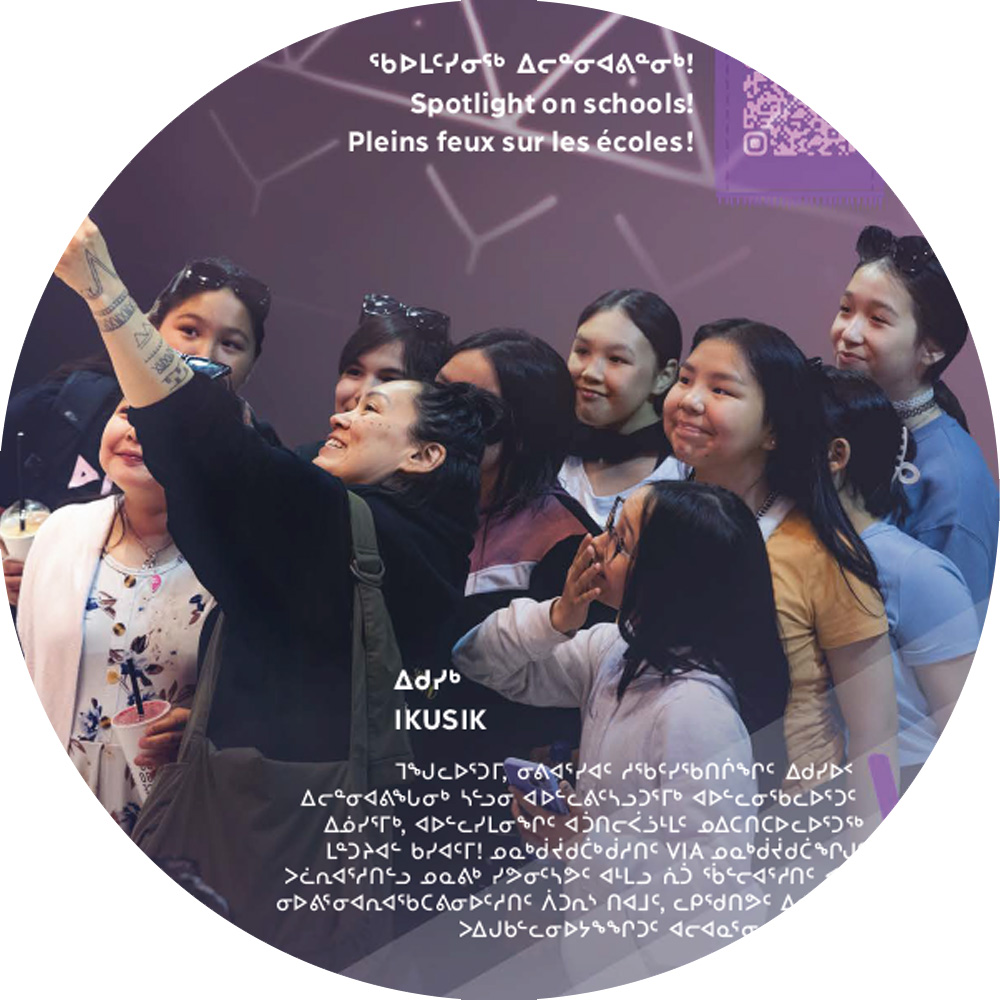
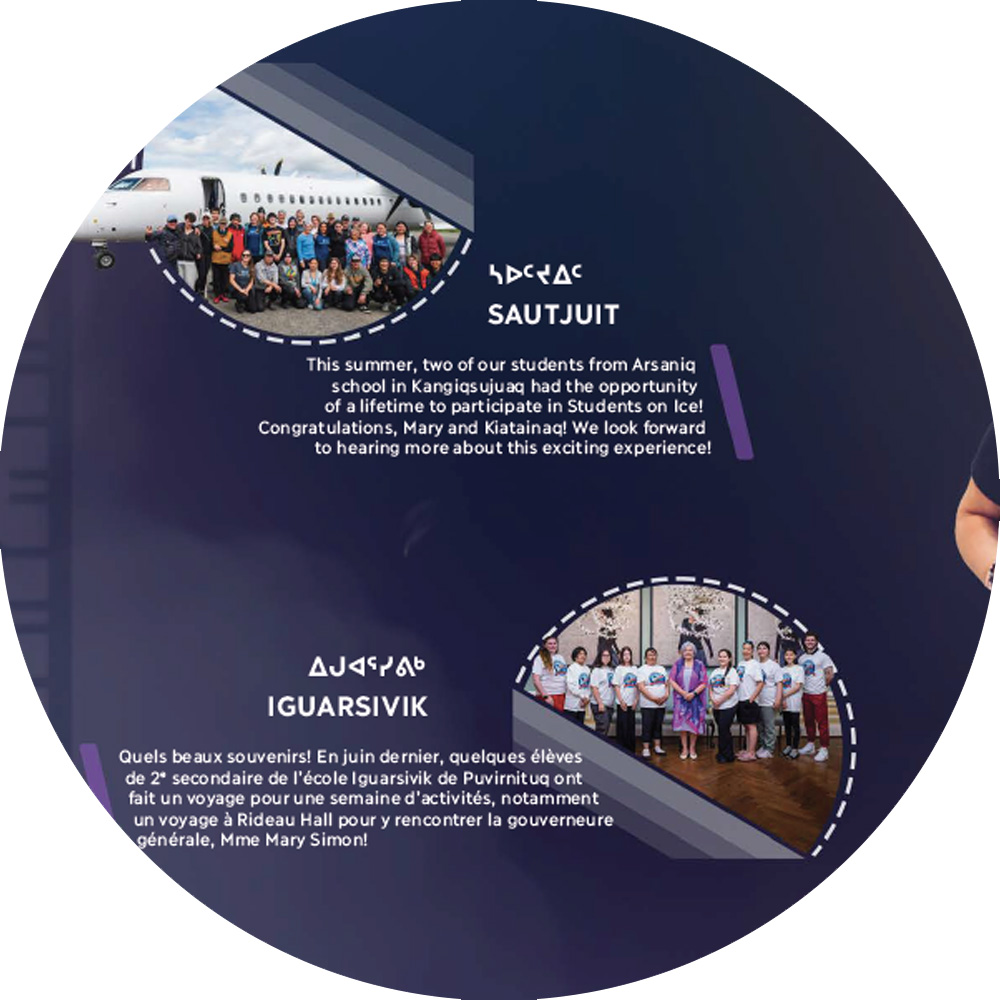
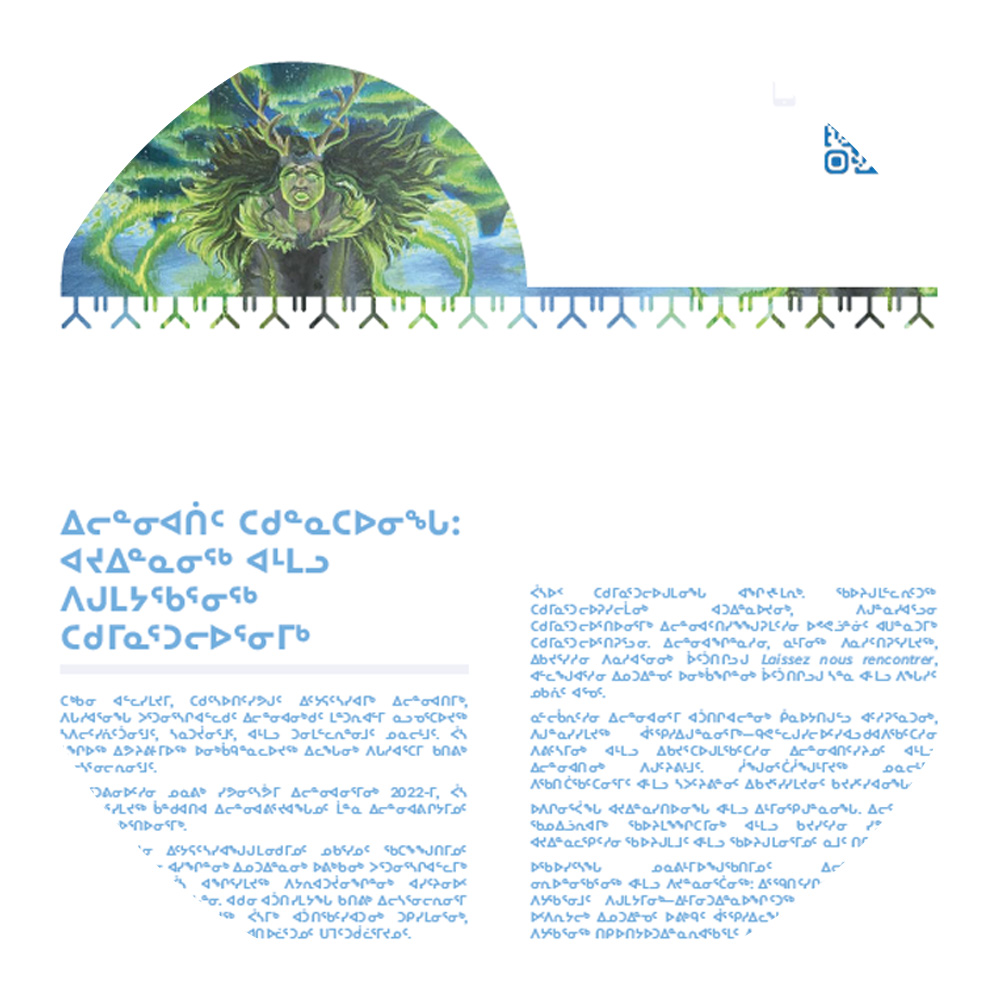
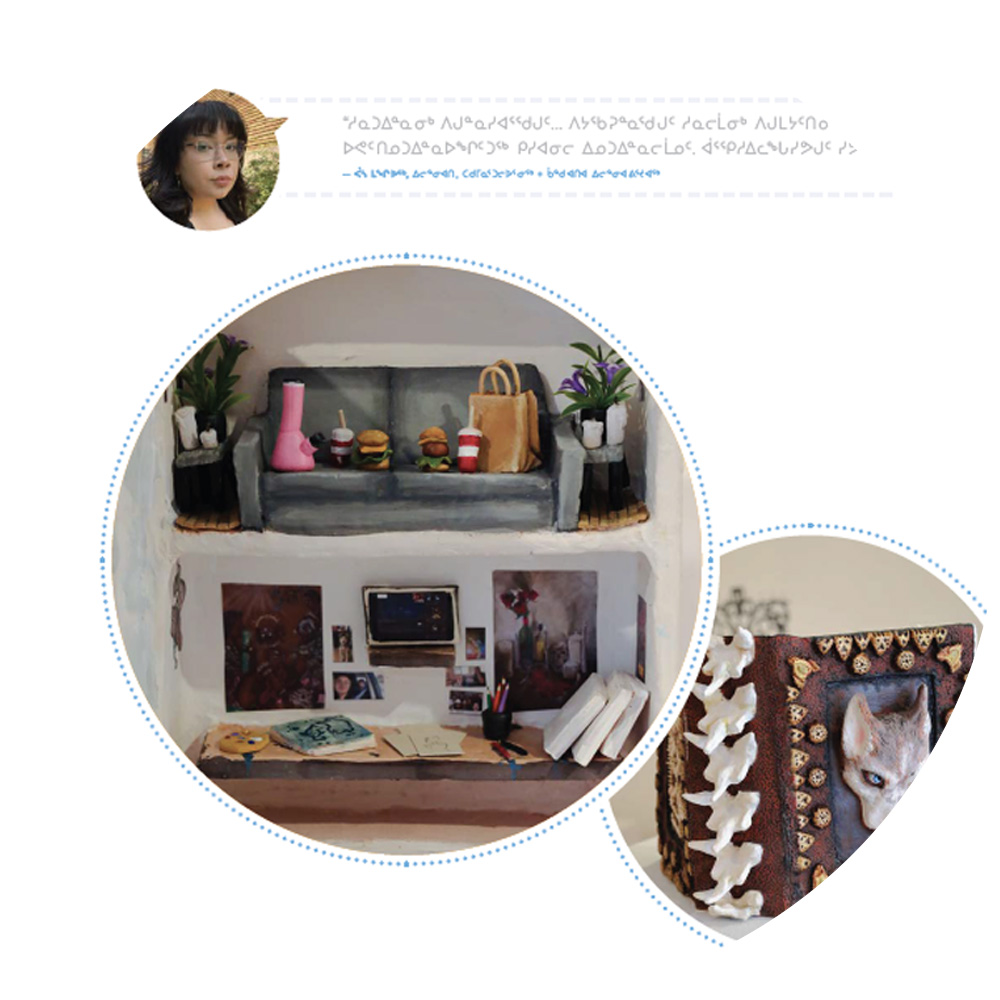
Once the name was chosen, graphic designer Gabriel Gagnon took over, and he went deep. The dotted lines that run through Kiluit’s visual identity are not decorative. They reference the practice of hand-stitching seal skin onto kayak frames, a form of ancestral knowledge that kept communities alive on the water for centuries. “Those stitches were technology,” Gabriel Gagnon explains. “Incredible, ancestral technology. The dots are a tribute to that.”

Coherence and continuity are not just design words. They are a commitment: every element we introduce has to connect to what came before and leave room for what comes next. That is how you build something people recognize and trust over time.
The logo follows the same logic. The needle shape doubles as a qajaq seen from above, with the thread trailing behind it. In syllabics, the word ᑭᓗᐃᑦ was designed line by line, as if it were embroidered, each character built to evoke texture and craft. “I wanted the syllabics to feel like they had been sewn, not typed,” says Gabriel Gagnon.
The colour palette, lighter than Kativik Ilisarniliriniq’s signature blue, was chosen deliberately to keep the layout airy and let the content, the people, and the stories take centre stage. “My main goal was always that people recognize this as a Kativik Ilisarniliriniq communication,” he says. “Everything had to be integrated, consistent, intentional.”
Making Kiluit official: the BAnQ deposit
Behind every issue of the Kiluit newsletter, there is work designed to ensure the stories outlast the present moment. The idea of obtaining an ISSN and making a legal deposit at BAnQ came from Joseph Denis-Pelletier, a former member of the communications team who was instrumental in getting the project off the ground. He brought the request to the Resource Centre, the team responsible for library and archival matters at Kativik Ilisarniliriniq.
Phoebe Chang, KI’s former Literacy Development Agent, took on the process. “A legal deposit at BAnQ makes it official,” she explains. “It increases visibility: it’s like leaving your mark on Quebec’s cultural landscape.” Each issue of Kiluit is now deposited in two formats: two physical copies and a digital link to the PDF. The publication is indexed, searchable, and accessible to anyone with a library card.
For Gabriel Besner, whose class gave Kiluit its name, the archiving carries a meaning that goes beyond communications. The school board has produced a wealth of creative work over the years, from teaching materials to student projects, much of it scattered and undocumented. A formally registered publication with an ISSN and a presence at BAnQ is a different kind of record: traceable, preserved, and publicly accessible for anyone who wants to understand what education in Nunavik has looked like over time.
What’s next for Kiluit?
Two years in, the team is already thinking ahead. The most significant development: the digital version of the newsletter is going public. Until now, the quarterly edition has been distributed exclusively to Kativik Ilisarniliriniq staff. That is about to change. For the first time, the newsletter will be available to anyone, opening up its stories, its voices, and its window into Nunavik education to a much wider audience, including partners, community members, and anyone with an interest in what is happening in the region.
The move reflects what Kiluit was always meant to be. “We work in a complex environment, serving a multilingual, northern community,” says Jade Bernier. “There is no reason the work happening in our schools should only be visible to the people already inside the organization.” Beyond that, the team is exploring a subscription system to deliver paper issues to Inuit living in southern Quebec, while also looking into provincial design awards where Kiluit could be submitted. “Getting a design award with an in-house product, competing alongside agencies—that would be something we could all be proud of.”
For now, Kiluit continues to reach every post office box in Nunavik twice a year in print, while four digital editions are published annually, in Inuktitut, French, and English. A small newsletter focused on education, stitching a big territory together.
Interested to know more about this subject? You may enjoy reading this story:
An exciting new way to reach Nunavimmiut called ᑭᓗᐃᑦ | KILUIT ➔
We’re hiring, and we offer attractive benefits! Join our team, apply today.
BROWSE JOBS ➔
BROWSE BENEFITS ➔
We have an awesome team of dedicated staff. Meet more of our long-time employees here: